
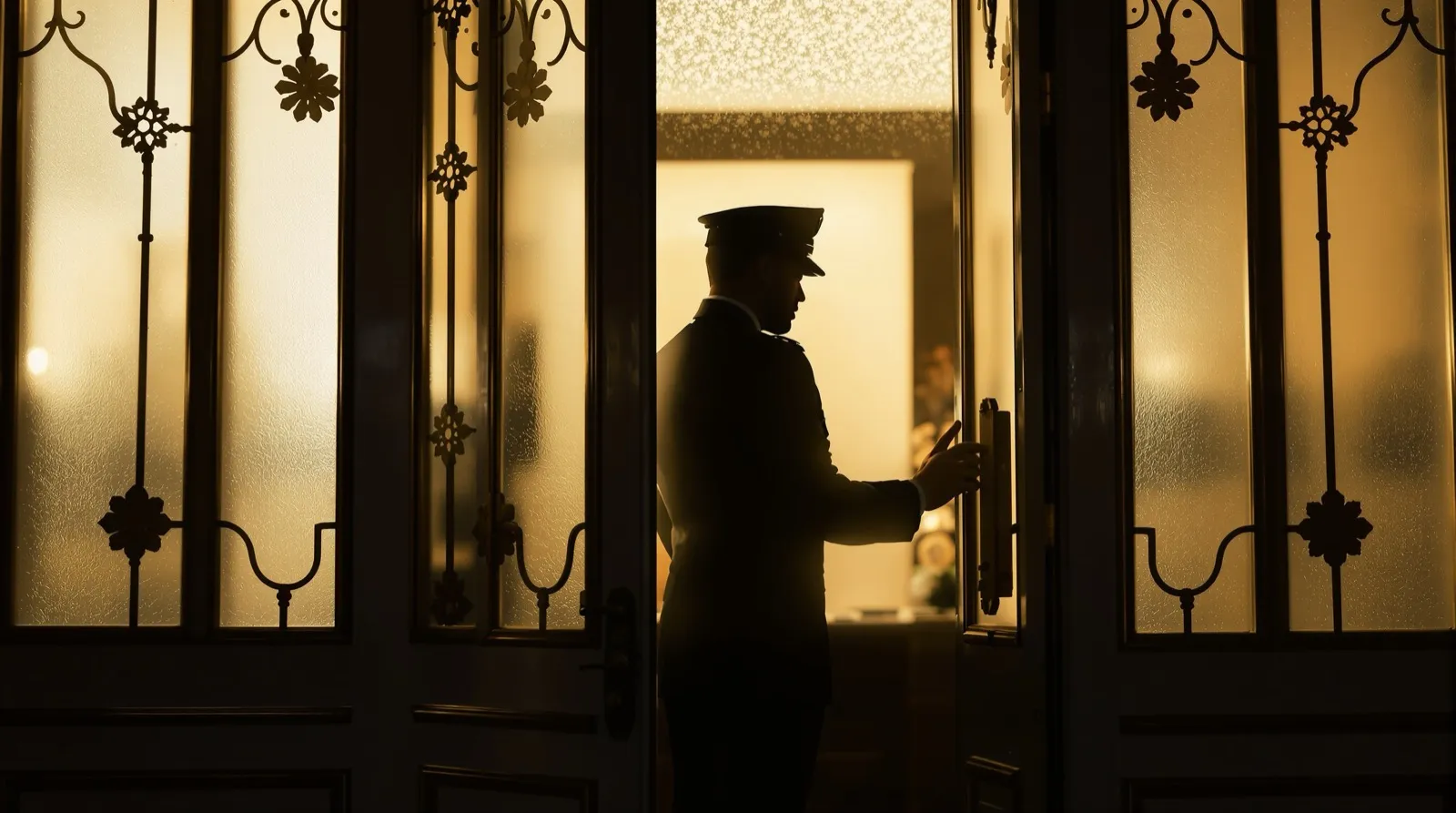
Every business has a “doorman”, whether they realise it or not.
Hotels learned this the hard way—and it cost them billions.
When revolving doors became fashionable in the 1980s, many hotels rationally concluded that doormen were an avoidable expense. After all, an automatic door could open itself, and the numbers made sense on paper.
Except the decision was wrong.
A doorman isn’t merely someone who opens a door. Yes, they help with practical tasks—moving on loiterers, keeping an eye on vehicles, smoothing small frictions. But their real value lies in something far more powerful: psychology.
In the 1990s, cognitive researchers articulated the peak-end rule: people judge an experience mostly by its most intense moment (the peak) and by how it ends—not by the average of the whole. In a hotel, the doorman controls both of these moments: the emotional “peak” of arrival and the “end” of departure.
Swap that personal, attentive interaction for an impersonal automated door, and you unintentionally degrade the two moments that matter most. The guest feels less welcomed and less valued—even if they can’t articulate why. Their memory of the stay shifts downwards, and so does the hotel’s reputation, loyalty, and long-term revenue.
This is the Doorman Fallacy: removing what looks non-essential, only to discover it was quietly doing the heaviest lifting in perception and loyalty.
Every organization has a doorman
In your own business, who plays this role—or what stands in for it?
What happens at the very first and very last touchpoints:
- When a customer phones you?
- When they walk into your branch?
- When they reach your website?
- When they’re put on hold, transfer, or exit an interaction?
These “doorman moments” decide whether customers feel respected or dismissed, welcomed or inconvenienced. And once you lose that ground, it’s hard—and expensive—to win it back.
AI is accelerating the problem
Right now, many businesses, in the rush to automate, are quietly repeating the same mistake hotels made decades ago. They’re replacing human-centred touchpoints with poorly designed AI interactions that feel generic, cold, or robotic—eroding brand perception in the one place customers are most sensitive.
They’re committing the Doorman Fallacy at scale.
How CUBE helps you avoid this trap
CUBE is uniquely positioned to help you understand how customers actually perceive your touchpoints—and to blend behavioural science with the right delivery technology. That means designing systems that preserve the psychological “doorman effect”, even when automation is involved.
Because once you lose the moments that shape customer memory, you lose far more than you save.